
Call me Ishmael.
Back in my grandfather’s time, pigeons lead a life of quite isolation, staying aloof of mankind’s trivial pursuit. The only way we ever figured in the lives of humans was during those cute little Spell Bee championships, when dwarfish, bespectacled Indian-American kids scrunched up their foreheads, chewed on their pencil-ends, and fretted over whether to include the ‘d’ in our names or not. Good times, I have been told.
Admittedly, unlike our flamboyant cousins, peacocks, also known as the ‘fruit cakes’ among birds, pigeons are not the most charming members of the avian universe. However, I’m an exception to that rule – I belong to a fierce-blooded, rebellious lineage. Centuries ago, on a sunny morning, as a bright young man in his twenties sat under an apple tree and looked up at the sky, in the futile attempt to figure out the truth about the universe, it was my great-great-great-great grandfather who, perched atop that same tree, in a fit of anger and pity at the lack of traction in human intelligence, yanked the apple off its branch with his beak, and threw it furiously down upon the young man’s head.
Turns out it was a sensible thing to do, because it leveled the playing field. The blissful convenience of letting the laws of physics carry your ammunition to your target is an unmatched luxury. Our relations with humankind would be skewed if they didn’t realize what the force pulling everything to the ground was all about.
Centuries later, after our family branched out to the tropical climates down South on board a certain Portugese ship, we found ourselves in the small hamlet, located miles away from civilization, right in the middle of the desert.
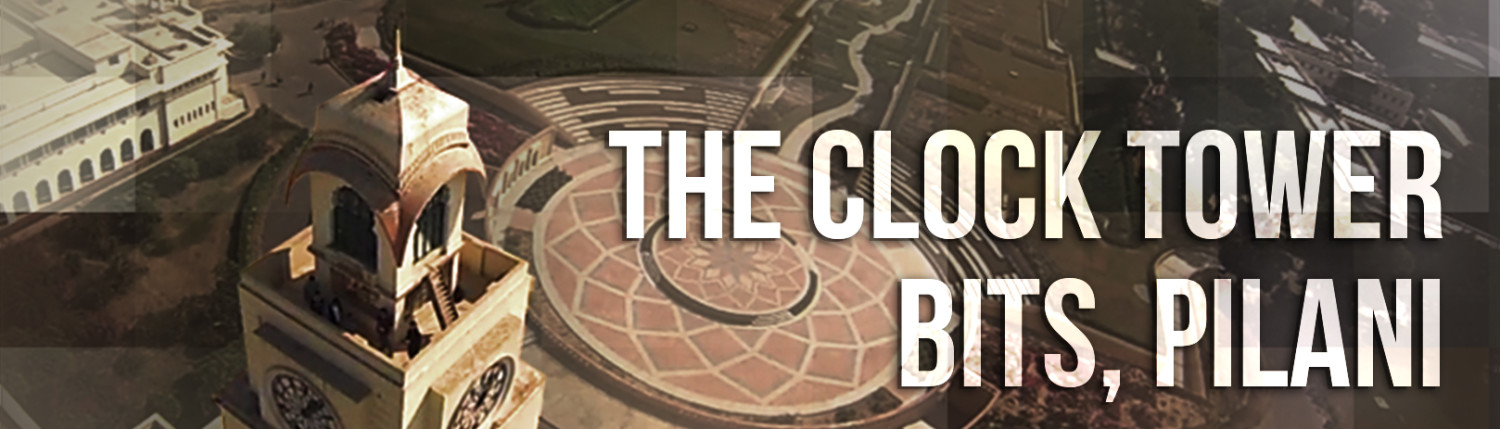
I might mention here, humans are fickle creatures, and their race is slowly spiraling into the abyss on self-destruct mode – they don’t pose a challenge to us. However, every once a while, our kind comes across an entity that frightens us, and makes us walk to-and-fro hurriedly across the window sill, as we chalk out plan after plan of action, in vain. The Clocktower was such a specimen – a tall, towering sentinel, a mighty queen bee, which governed the rhythms of its ecosystem. It had hands that went all round, and an all-seeing head with four faces frescoed with sneers of cold command pointing towards all the four directions. We talked about it in hushed whispers – every time that large towering monstrosity rung in shrill, sonorous bursts, people all around would suddenly get up and exit rooms, enter labs, drop whatever they were doing and do something else.
My grandfather was the first to scale this beastly tower. Paraphrasing Orwell, “one bright hot day in April, when the clocks were striking thirteen”, he set wing upwards, braved the gusty summer draught, and effortlessly summited the tower in one go. Up there, in his own words, he saw a “feisty rogue housed in a box, whose innards meshed against each other producing each hour a clank more deafening than the one before. Covered in oil and sweat, the monster raged on unfettered, as it churned out spell after spell of pure evil.” In his defense, my grandfather was then at his senile best. We figured later that the only reason he had achieved this miraculous feat was because he had forgotten it was impossible.
“A small flight for bird, a huge communal defecation spot for birdkind.”, he had shouted decisively on his way down. Sure enough, this amazing tour de force instilled hope in our kin – the indomitable had fallen from its edifice. Our family shifted to up-top from then on – the view was better.
All those who tch-tch our actions-it is the human predicament that amazes me – how the same people who write grandiose poetry, compose beautiful operas, perform life-saving surgery and pen down tear-jerking prose, are ashamed of and alienate themselves from their more visceral urges – to defecate, to urinate, to break wind, to regurgitate. We birds, however, do not suffer under any such predicament – our best is as good as our worst, and what you see on top of the Clocktower is a product of that line of thinking.
And so goes the story, of how we, creatures of hollow bone, but solid will, conquered the seemingly unconquerable. My grandchildren tell me there’s a team up here trying to fix it. I wish them good luck, and a few more lessons in gravity.
-Sibesh Kar, ’14